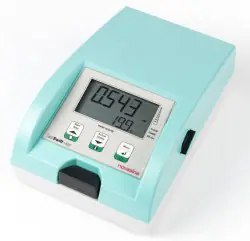
Neutec Group supplies laboratory autoclaves and steam sterilizers for microbiology, biotechnology, pharmaceutical, life-science research, education, government, food, and industrial laboratories. Available systems include compact benchtop sterilizers, space-efficient vertical autoclaves, and higher-capacity front-loading models from established manufacturers including Priorclave, Tuttnauer, and Raypa.
Shop Laboratory Autoclaves
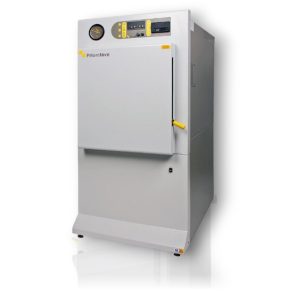
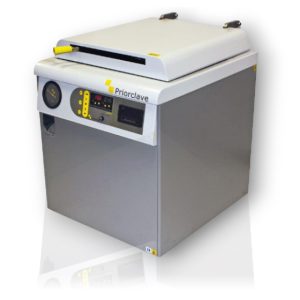
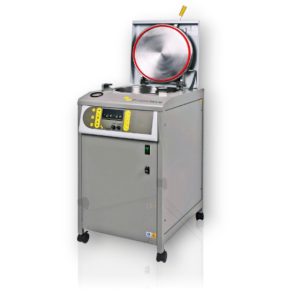
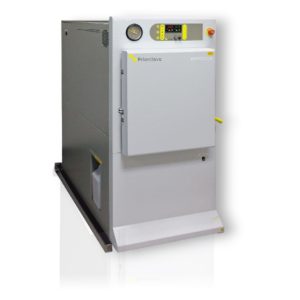
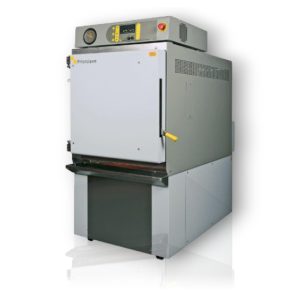
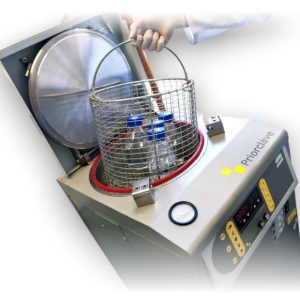
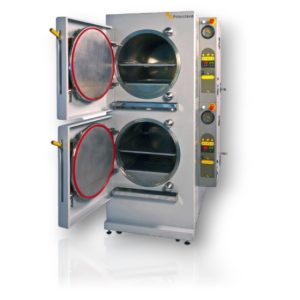
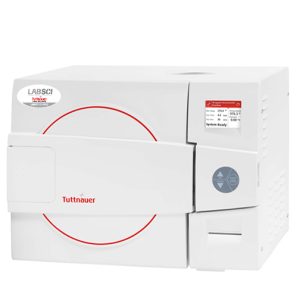
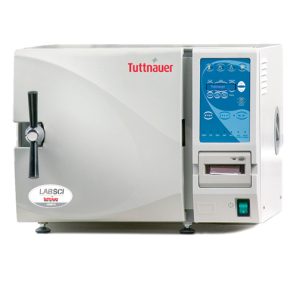
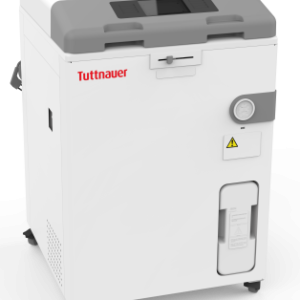
Selecting the right autoclave can significantly affect more than sterilization performance. Water consumption, energy requirements, laboratory space, maintenance, and equipment downtime all contribute to an autoclave’s long-term operating cost. Manufacturer data illustrates how significant these differences can be. Priorclave reports that non-jacketed autoclaves can use approximately one-sixth to one-tenth as much water and energy as comparable jacketed systems. In one university comparison cited by Priorclave, jacketed autoclaves consumed approximately 150 liters of water per cycle, compared with less than 8 liters for similarly sized purpose-built non-jacketed units.
Neutec’s Priorclave cylindrical-chamber systems are engineered around a simpler, purpose-built approach to laboratory sterilization. Depending on configuration and application, a cylindrical-vessel front-loading Priorclave can use up to 87% less water and 75% less energy than a comparable rectangular-vessel model. Fewer mechanical components and on-demand steam generation can also reduce maintenance requirements and opportunities for unscheduled downtime.
Laboratory autoclaves use pressurized saturated steam to sterilize laboratory equipment, glassware, media, and other materials and to decontaminate biological waste. The correct system depends on what you sterilize, load dimensions and volume, throughput, available laboratory space, utilities, required cycles, and future capacity.
Neutec instrument specialists help laboratories evaluate these requirements and identify an autoclave suited to the application, facility, and long-term operating needs.
Which Type of Laboratory Autoclave Do I Need?
The best laboratory autoclave is not necessarily the largest model available. The appropriate configuration depends on the materials being processed, load dimensions and frequency, required throughput, available space and utilities, sterilization cycles and laboratory workflow.
| Autoclave Type | Typical Capacity | Best For | Loading |
| Benchtop/Tabletop | Approx. 11–60L | Smaller labs and lower-volume loads | Front |
| Vertical | Approx. 60–150L | Tall vessels, media, and biological waste | Top |
| Front-Loading | Approx. 100–320L | Larger loads and higher throughput | Front |
| Pass-Through | Varies | Controlled or separated laboratory environments | Two-sided |
Benchtop & Tabletop Autoclaves
Compact benchtop and tabletop laboratory autoclaves are well suited for facilities where space is limited and sterilization loads are relatively small. They can be an efficient choice for microbiology and research laboratories, educational facilities, quality-control operations, and shared laboratory environments.
When evaluating a benchtop model, consider chamber dimensions as well as total capacity. The internal dimensions must accommodate the laboratory’s actual glassware, instruments, bottles, and other loads.
Vertical Top-Loading Autoclaves
Vertical or top-loading laboratory autoclaves provide substantial chamber capacity while maintaining a relatively small floor-space requirement. Their chamber geometry makes them particularly useful for taller vessels, flasks, fermenters, and bioreactors as well as microbiological media and biological waste.
Neutec offers vertical laboratory autoclaves in capacities ranging from approximately 60 to 150 liters, allowing laboratories to balance capacity requirements against available floor space.
Horizontal Front-Loading Autoclaves
Front-loading laboratory autoclaves are designed for laboratories processing larger loads, greater volumes, or higher throughput. Neutec offers systems ranging from approximately 100 to 320 liters, including models that can be configured for specialized research and laboratory applications.
Front-loading configurations can simplify handling of larger or heavier loads, while cylindrical-chamber models may provide significant utility and maintenance advantages for laboratories that do not require the continuous high-throughput operation associated with traditional hospital-style sterilizers.
Pass-Through Autoclaves
Pass-through autoclaves may be appropriate when materials need to move between separate controlled areas without compromising established workflows or containment procedures. These systems use doors on opposite sides of the sterilizer and can be configured for specialized laboratory and research environments.
Laboratory Autoclave Applications
Laboratory autoclaves support sterilization, preparation, and decontamination workflows across microbiology, biotechnology, pharmaceutical research, education, food science, quality control, and industrial laboratories.
Common applications include:
- Sterilizing laboratory glassware and instruments
- Preparing and sterilizing microbiological media
- Decontaminating biological laboratory waste
- Sterilizing flasks, bottles, and laboratory containers
- Processing fermenters and bioreactors
- Supporting microbiology and life-science research
- Research and quality-control applications
- Specialized sterilization and testing cycles
Equipment selection should always reflect the specific material and process. Liquids and microbiological media, for example, can have different heating, cooling, and cycle-control requirements than instruments, glassware, or biological waste.
How to Choose a Laboratory Autoclave
Selecting an autoclave should begin with the laboratory’s application, not simply a preferred chamber capacity.
Chamber capacity: Determine the dimensions and volume of typical loads rather than relying exclusively on the chamber’s stated liter capacity.
Loading configuration: Consider whether a compact benchtop, vertical top-loading, or horizontal front-loading system provides the most efficient workflow.
Materials being sterilized: Glassware, liquids, microbiological media, instruments, and biological waste can require different cycles and equipment capabilities.
Throughput: Estimate the number and size of loads processed per day. A laboratory running a few cycles daily may have very different equipment requirements from a high-throughput facility operating continuously.
Water and energy consumption: Evaluate utility requirements as part of the total cost of ownership. Autoclave chamber design, steam generation, vacuum equipment, and cooling systems can significantly affect resource consumption.
Maintenance and reliability: More complex systems contain additional pumps, valves, steam-generation equipment, and other components that may require servicing. A simpler system with fewer mechanical components can reduce maintenance requirements and opportunities for unscheduled downtime.
Available utilities: Review electrical requirements, water quality and availability, drainage and ventilation, as well as whether the system requires an integrated, external, or facility steam source.
Cycle requirements: Determine whether applications require programmable temperatures and dwell times, vacuum, drying, cooling, liquid cycles, data logging, or other specialized controls.
Available space: Measure not only the equipment footprint but also the clearance required for loading, ventilation, maintenance, and service access.
Future capacity: Choose equipment capable of supporting anticipated growth without substantially oversizing the system for today’s requirements.
A Neutec instrument specialist can help assess these variables and recommend an appropriate laboratory autoclave configuration.
The Cylindrical Autoclave Advantage
For many research and life-science laboratories, chamber design can have a substantial effect on resource consumption and maintenance.
Cylindrical pressure vessels require less structural reinforcement than comparable rectangular vessels. Priorclave combines cylindrical chambers with in-chamber, on-demand steam generation in many of its research-grade autoclaves. The system generates steam when a cycle is required rather than maintaining a continuously heated external steam jacket.
For applicable models and operating conditions, this approach can provide:
- Up to 87% lower water consumption compared with a comparable rectangular-vessel model
- Up to 75% lower energy consumption
- No water or energy consumption for steam generation while the system sits idle
- Fewer mechanical components
- Reduced maintenance requirements
- Lower potential for unscheduled downtime and associated repair expense
- A smaller equipment footprint for many laboratory applications
Actual water and energy consumption varies according to model, configuration, cycle, load, vacuum and cooling requirements, and facility utilities. Laboratories should therefore compare equipment based on their expected workload rather than chamber shape alone.
Laboratory Autoclaves from Priorclave, Tuttnauer & Raypa
Neutec Group supplies laboratory autoclaves from industry leaders Priorclave, Tuttnauer, and Raypa, providing laboratories with multiple chamber sizes, loading configurations, and control options rather than a one-size-fits-all sterilization solution.
Available equipment includes compact benchtop sterilizers, vertical top-loading units, and larger front-loading autoclaves. Depending on the model, systems can provide programmable sterilization cycles and options for vacuum, cooling, drying, process monitoring, and data logging.
Neutec also provides application guidance and technical support to help laboratories select, install, and maintain autoclave equipment appropriate for their workflow and operating requirements.