Due to global climate changes as well as its populations’ increased demand for food, scientists need to know more about the quality and health of pollen, as it holds genetic information that is indispensable for efficient plant breeding and seed production. Additionally, it is imperative to gain a greater understanding of cells’ behavior and properties, so that their bioprocesses may be optimized to improve crop yields and guarantee the best outcomes relative to the safety and quality of the product. Flow cytometry, that is single cell analysis, aids in the study of pollen and bioprocessing.
For pollen, using a fast, easy-to-use, and highly accurate tool to determine pollen quality aides in the study of abiotic factors such as temperature, humidity, and radiation to determine their negative impact on pollen viability, quantity, and quality. Pollen Analyzers, or pollen count devices, measure pollen viability and can assist by providing:
- Improved, and faster Double Haploid production process
- Improved efficiency in line selection by early removal of bad pollinators
- Enables breeding for heat tolerant strains that feature high pollen quality
- Improved precision phenotyping and gene mapping
Quality pollen = better quality seeds and greater yields. Especially in expensive hybrid breeding, but also in line breeding, the health, and quality of pollen is of highest importance. A high quality of pollen is essential for achieving efficient pollination and to obtain a high seed set. For the optimization of production factors like crop placement or the female-to-male ratio, the knowledge about pollen quality and characteristics is vital. Here again is where flow cytometry/single cell analysis proves valuable to improve commercial seed production and to continuously and reliably obtain the highest seed sets possible. Production researchers and seed producers rely on the information obtained through the use of pollen count devices which accurately determine pollen viability. Outcomes include:
- Obtaining accurate information for crop placement.
- Determining the pollen viability threshold for a full seed set.
- Optimizing the production pattern for low-performing pollinators.
- Setting up the right protocols for pollen (storage) management.
As stated above, cell analysis is a crucial step in the development and optimization of bioprocessing. Insights into the behavior and the properties of cells lead to optimal bioprocess outcomes, including improved yields. Neutec is proud to carry Amphasys’ advanced technology devices that are based on Impedance Flow Cytometry and provide an easy-to-use method for the analysis of single cells.
In these devices, electrical resistance and the dielectric properties of cells are suspension-based. This means that the cells under investigation do not need specific molecular markers or dyes (AKA pollen viability staining) and are not altered at all by the measurement. Implemented on microfluidic chips, this non-invasive and label-free method speeds up efficient characterization of single cells in suspension, as well as for the cells further processed for their intended use.
Benefits Include:
- Requires no labeling, staining, or incubation processes.
- No calibration required.
- Offers short sample preparation, shorter measuring times, and immediate results.
- Features highly sophisticated data analysis software.
- Provides simultaneous analysis of cell viability, counting and other cell properties.
- Measures cell sizes between 1 µm and 50 µm
- Lower operational costs.
- Online measurements made via bypass system.
Amphasys’ new-generation flow cytometer equipment are plug & play automated cell counters, designed to blend simplicity with flexibility. The optical component-free design greatly reduces set-up times while keeping its required maintenance to a minimum. Based exclusively on electrical measurements, Amphasys’ automated cell counters banish time-consuming sample preparation procedures and the use of expensive fluorescent dyes. Featuring latest generation digital signal processing electronics that have been specifically tailored to Amphasys’ semi-disposable chips, best-of-class impedance analysis on single cells is readily achieved.
These automated cell counters provide a powerful tool to analyze pollen viability, thereby helping to increase the yield of high quality seeds and reduce the cost of production (for example, by increasing the female-to-male ratio and the yield per plant).
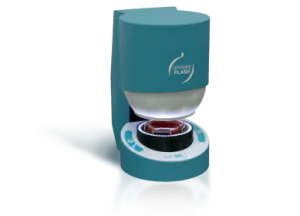
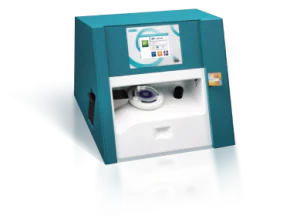
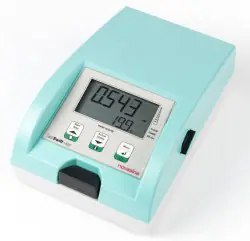
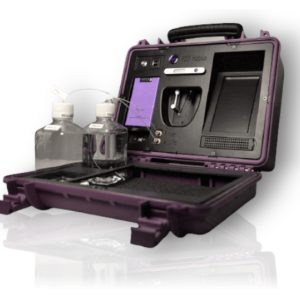
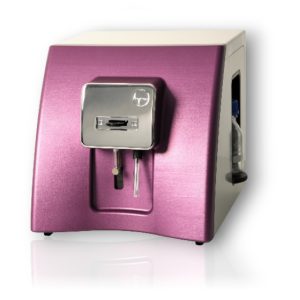
In addition to testing for pollen viability, the label-free technology inherent in Amphasys’ latest flow cytometer equipment is suitable for analysis of virtually any kind of single cells, such as yeast, revealing characteristics such as cell size and morphology, viability (apoptosis), or cell differentiation. The patented, “lab-on-chip” solution eliminates time-consuming, complex sample preparation steps, such as cell labeling and the need for an expensive laboratory infrastructure. Neutec’s recommendations for state-of-the-art flow cytometer equipment include the Ampha P20 – Pollen Analyzer, ideal for ‘in the field’ applications due to its portability, and the Ampha Z32 Impedance Flow Cytometry, designed for use in numerous pollen count and viability analysis applications. Learn more about these instruments above.