
Hear the word ‘cannabis’ and it’s perhaps an image of spliffs that most readily springs to mind. Things are changing, however. Cannabis products are increasingly promoted in countries or states where consumption of the bi-product CBD is legal.
CBD is already used in everything from biscuits to gummy sweets. To create a safe, edible CBD product, the necessary measures HACCP and QC need to be applied and water activity plays a key role here.
What is CBD?
Wikipedia defines cannabidiol or CBD (not to be confused with cannabinol or cannabinodiol) as, “a naturally occurring cannabinoid constituent of cannabis. It was discovered in 1940 and initially thought not to be pharmaceutically active. It is one of at least 113 cannabinoids identified in hemp plants, accounting for up to 40 per cent of the plant’s extract.’ As of 2018 in the United States, Food and Drug Administration approval of cannabidiol as a prescription drug called Epidiolex for medical uses has been limited to two rare forms of childhood epilepsy.”‘’
“Cannabidiol can be taken into the body in multiple different ways, including by inhalation of cannabis smoke or vapor, as an aerosol spray into the cheek, and by mouth. It may be supplied as an oil containing only CBD as the active ingredient (no added THC or terpenes), a full-plant CBD-dominant hemp extract oil, capsules, dried cannabis, or as a prescription liquid solution.‘
“As an ingredient in edibles, CBD is subject to the same food safety standards in cooking, mixing, depositing, cooling, and packaging.”
Water Migration
It is a misconception to think that water migrates from a high-moisture to a low- moisture area. Imagine a sea in the valley, a mountain lake and a river connecting the two. If water migration was merely dependent on water from the area where there is more moving to the area where there is less, it would flow from sea to lake. Obviously, though, this is not the case — so, if amount of water is not relevant in migration, something else must be! The water in the mountain lake has a higher potential energy than the water in the sea and water migrates from high to low potential, so it flows downhill. The potential of the free water in a sample is water activity, thus it is now clear why water migrates from a high to low water activity area.
Imagine a CBD edible chocolate or gummy sweet. Beyond any microbial issues, maintaining texture will become a critical factor in this sweet’s production: as water starts to migrate it might harden or soften the outer part of the gummy sweet or change the properties of the chocolate coating by adding or removing water. Such problems are familiar to those working in the bakery sector. Any industry offering multilayer CBD products should be talking to its bakery counterparts in order to learn from the issues already encountered within that sector.
How to measure water activity
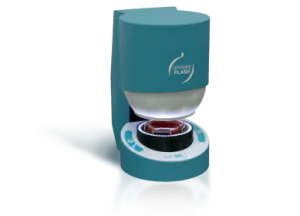
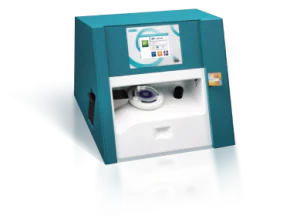
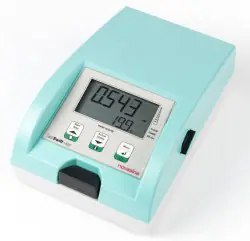
The basic measurement concept is the same for all water activity manufacturers. A sample is placed in a measurement chamber, which must be completely sealed once closed to avoid humidity exchange with ambient air. Best practice is to have a temperature-control, too, to guarantee a constant of 25°C and thus compliance with AOAC and ISO regulation. What can make the difference is the sensory technology. There are different ones on the market but Novasina’s resistive electrolytic technology offers arguably the widest measurement range, highest accuracy and repeatability.
In the CBD industry, the LabMaster-aw neo is well accepted and used by producers, as well as by reference (contractor) labs.The LabMaster-aw neo features a 21CFR1 1 compliant audit trail and user management, full temperature control and automatic calibration and verification procedure.
With an accurate water activity measurement that you can rely on, microbiological and product (texture) stability are far clearer and correct, meaning measures can be implemented throughout the R&D phase. All this avoids the potential for costly and damaging product recalls further down the line.
June 22, 2021 – Scientist Live
Dr. Brady Carter discusses the new standard for water activity measurement
Water activity has been broadly used in the pharmaceutical industry since the publication in 2006 of USP <1112>, an informational chapter on the application of water activity in pharma. Although <1112> provided guidance for the utilization of water activity, it was not an official method. Now USP has developed USP <922> Water Activity as an official method that will hopefully further facilitate its implementation as an integral part of a pharmaceutical quality program.
There can be an abundance of confusion with water activity instruments concerning test time. Some instruments claim a 5-minute test time while others offer fast or quick modes. The truth is that water activity test time is determined by the sample and not the instrument. Since water activity is an equilibrium measurement, a reading is not complete until vapor equilibrium has been achieved and this process cannot be sped up by an instrument (1). So, any claim to a specific test time is illogical and would only be true for select samples. The reality is that most types of samples require a minimum of 5 minutes or more to reach true equilibrium and test times that are faster than that are either using a prediction or the system uses end-of-test settings that are not stringent enough to achieve true vapor equilibrium.
January 4, 2022 – Scientist Live
Dr. Brady Carter on modelling shelf life with water activity
The shelf life of a product is defined as the practical time that it remains desirable to consumers. It dictates the radius of distribution for the product, how it must be stored and its best by date. Failure to match this expected shelf life can result in customer complaints, product recalls and tarnished reputation. Consequently, correctly determining the optimal production process and handling that maximizes the shelf life and then monitoring to make sure those conditions are met is the difference between profitability and lost revenue.